 EN
EN
How LED Backpacks Transform Out-of-Home Advertising
Proximity, motion, and real-time content: Why LED backpacks outperform static signage
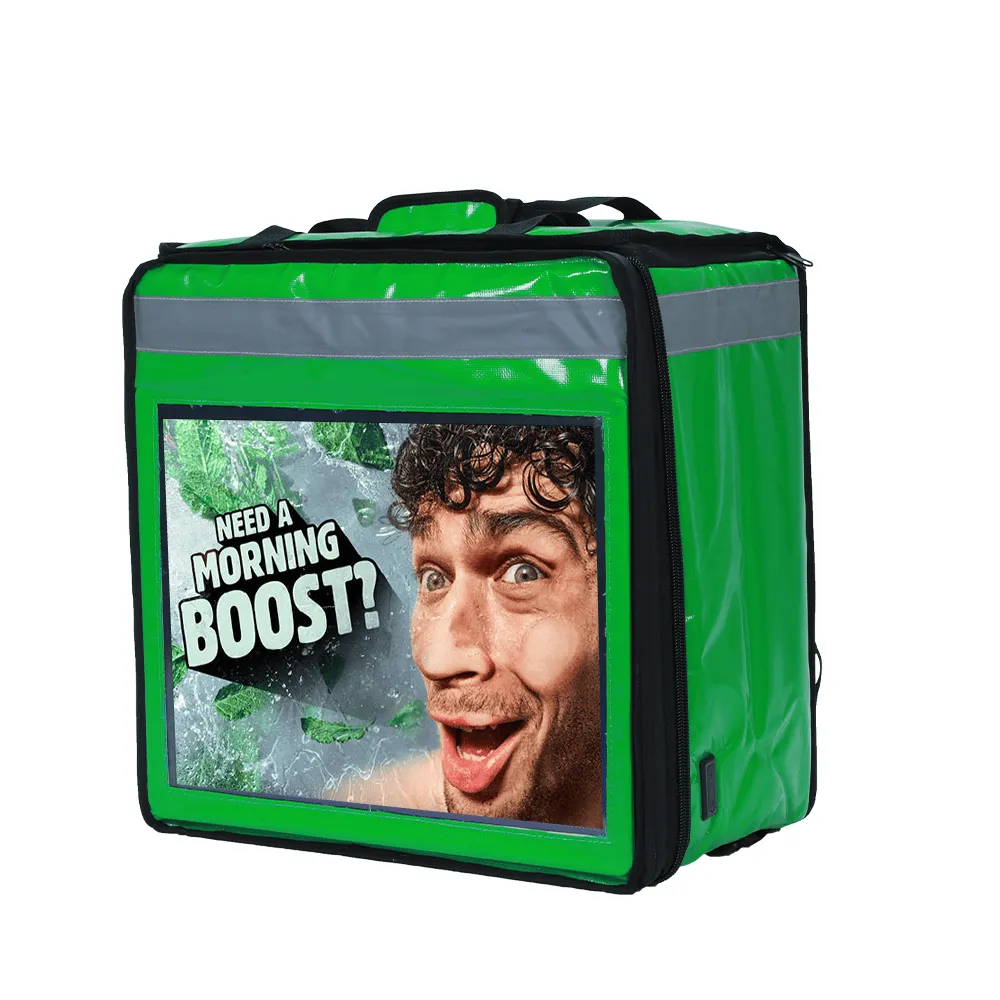
LED backpacks are changing how we think about outdoor advertising because they bring together three key elements: being close enough to touch, moving naturally with people, and updating messages on the fly. Regular billboards just sit there in one spot, but these wearable displays actually walk right past potential customers, getting much closer than any static sign ever could. The Out of Home Advertising Association says this proximity boosts engagement rates by around 47%. People tend to follow these moving lights with their eyes without even realizing it, which means they stay focused on the message for nearly three times as long compared to regular signs stuck on buildings. What makes these backpacks really special though is their ability to change content instantly through cloud connections. Brands can push out new messages based on weather conditions, announce last minute sales, or tie into events happening nearby all within just a couple of minutes flat. When we look at all these factors working together - closeness, movement, and quick response time - studies show that brands using LED backpacks get remembered about 68% better than those relying on traditional billboards and posters.
Urban deployment advantages: High-density foot traffic, event saturation, and behavioral targeting
Cities really bring out the best in LED backpack advertising because they put these moving billboards right where folks tend to cluster naturally. Take New York or Chicago for instance - sometimes there are over 15 thousand pedestrians packed into just one square mile of space. That kind of foot traffic creates constant eyeballs on these wearable ads something traditional street signs simply can't compete with. When big crowds form during concerts, football games, or rush hour commutes, the backpack wearers know exactly where to position themselves. They'll hang around subway exits, near food courts, anywhere people stop to look around. Smart companies take note of this pattern and plan their campaigns accordingly, making sure their messages reach maximum viewers without getting lost in the urban chaos.
- Heat-mapped routing around high-intent zones (e.g., subway entrances, food courts)
- Daypart-optimized scheduling aligned with commuter peaks and lunchtime footfall
- Geo-fenced content triggers activated near complementary businesses (e.g., showing coffee promotions near bakeries)
This mobility transforms broad outdoor impressions into targeted audience intercepts—delivering 3× higher engagement in metropolitan campaigns compared to conventional OOH.
ROI Measurement for LED Backpack Campaigns
Effective ROI analysis must shift beyond legacy metrics like CPM (cost per thousand impressions). LED backpacks generate dynamic, measurable interactions—not passive exposures—so success hinges on behavioral indicators that reflect actual intent and conversion influence.
Beyond CPM: Prioritizing dwell time, QR scan rate, and geo-fenced conversion lift
When we talk about dwell time, which basically means how long someone actually looks at something, this metric turns out to be around 47 percent better at predicting if people will buy stuff compared to just remembering they saw an ad somewhere (according to OOH Analytics from last year). Looking at QR code scans gives us another way to measure real actions taken because of campaigns, and in big cities where things happen fast, good campaigns often get between 12 and 18 percent of people scanning those codes. There's also something called geo-fenced conversion lift that helps figure out exactly what our ads are doing. Basically, it compares how much business comes in from areas where we ran our ads versus similar places where we didn't run them. Take one national drink company for example. They noticed their sales went up by about 22% near where they put branded backpacks at a huge music festival last summer. Most likely, this boost came from folks who were right there in the thick of things seeing those products up close.
Attribution best practices: UTM-tagged QR codes, Bluetooth beacons, and offline-to-online tracking
Robust attribution requires layered, cross-channel measurement:
- UTM-tagged QR codes embed campaign-specific parameters, enabling precise source tracking in Google Analytics and linking scans to downstream conversions.
- Bluetooth beacons detect prolonged proximity (e.g., 80% of users within 15 meters engage for 8 seconds), providing passive dwell validation without requiring user interaction.
- POS integration, using hash-anonymized device IDs synced with backpack GPS timestamps, bridges physical exposure to in-store purchases.
Deployments combining beacon and QR data show 68% of online conversions occur within three hours of exposure—confirming strong short-term behavioral influence and closing the attribution loop between mobile OOH and digital outcomes.
High-Impact Use Cases for LED Backpacks
Product launches, festivals, and political rallies: Timing, density, and message agility
LED backpacks really shine when timing matches up with crowded spaces and relevant content. During product launches, these carriers turn into walking brand representatives showing off live demonstrations, special QR code deals, and real time social media reactions right among groups of people interested in what's happening. When used at festivals, they take advantage of all that natural movement through crowds. We've seen cases where a single person wearing one gets eyeballs from around 5,000 festival goers each day. People tend to stop and look at these moving displays about three times longer than they would at regular signs standing still in busy areas according to Event Marketing Institute research.
During political rallies, campaign teams often tweak their messaging on the fly updating signs, slogans, and key points while speakers are still talking. Placing campaign materials strategically close to where journalists gather or near rival events helps boost visibility and creates stronger contrasts between competing messages. According to research from OOHAA last year, people remember campaign messages about 47% better when digital displays show the same info as what's being said onstage. There are basically three things that make these tactics work consistently across different locations and situations:
- Timing precision: Deploying units 30 minutes before peak attendance ensures maximum visibility during arrival surges
- Geo-density: Clustering 3–5 units within a 150-meter radius creates cumulative visual reinforcement
- Content fluidity: Updating promotions hourly based on live engagement heatmaps maintains relevance and reduces fatigue
This integrated approach delivers a 19% higher conversion lift than fixed installations—verified via Bluetooth beacon attribution—and achieves 22% cost efficiency gains by eliminating print production, changeovers, and static media waste.
Operational Advantages: Speed, Scalability, and Cost Efficiency
The efficiency boost from LED backpacks in mobile advertising is pretty remarkable. Traditional campaigns used to take weeks because they had to go through all sorts of permits, get fabricated, installed, and deal with regulations that hold everything back. With these backpack units, companies can launch ads almost overnight. Think about how brands react when something big happens on social media or there's a sudden trend going viral. They need to jump on it fast, and these devices make that possible. When it comes to scaling up, things work smoothly too. One backpack ad can reach around 15 thousand people each day in busy city areas. And if a business wants to expand to multiple locations, they don't face huge jumps in costs for extra staff, shipping, or creating new content for every spot.
From an operational standpoint, advertisers typically save around 30 percent on setup costs compared to old school OOH methods, while cutting down labor expenses by about 40% thanks to centralized remote content management systems. Static billboards and posters get outdated pretty quickly, creating all sorts of inventory problems. But LED backpacks? They completely wipe out this issue since content can be changed in real time whenever engagement data starts showing different audience behaviors. Industry research has shown that businesses running efficient marketing operations tend to enjoy profit margins that are between 15 and 20% better than their peers. So these LED backpacks aren't just some flashy new idea they represent a serious improvement in how companies manage their operations strategically.
FAQ
What are LED backpacks in advertising?
LED backpacks are wearable displays used in out-of-home advertising that present digital content to potential customers.
How do LED backpacks compare to traditional advertising methods?
LED backpacks offer greater proximity and mobility, provide real-time message updates, and achieve higher engagement than static billboards.
What are common uses for LED backpacks in marketing?
They are effective for product launches, festivals, and political rallies due to their mobility and ability to draw attention in crowded settings.