
 EN
EN
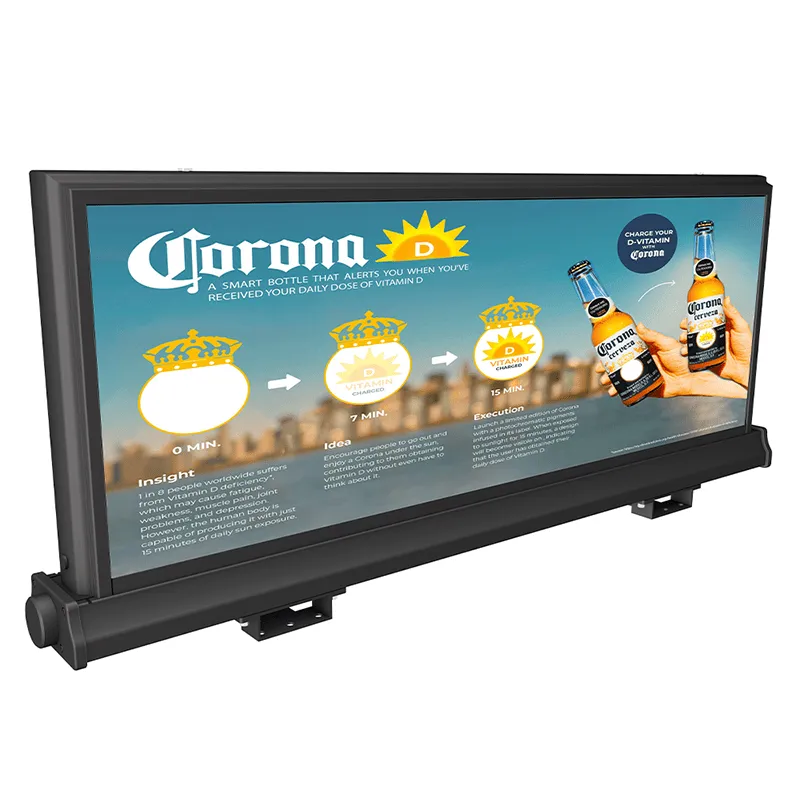
The Evolution of Urban Advertising: How Double-Sided Taxi LED Displays Are Transforming City Marketing
From Static Billboards to Mobile LED Advertising in Smart Cities
Most cities are moving away from those old paper advertisements and embracing LED displays that actually respond to what's happening around them. Take a look at those taxis zipping through town these days - their LED screens don't just sit there like regular billboards. They connect with people walking by, drivers stuck in traffic, even buses passing through intersections all at once. According to some recent research from Urban Media Analytics in 2023, these mobile displays cover about three times as many routes during the day compared to traditional advertising methods. Makes sense really, since smart cities are all about replacing those static posters with something that works better for everyone while using less power too.
Why LED Display Technology Is Ideal for Dynamic Urban Environments
Cities love LED screens because they work all day and night, can withstand rain or shine, and let advertisers change what's shown whenever needed. New tech makes these displays smart too. They can send different messages based on where people are moving around. For instance, big screens outside sports arenas start showing game ads when fans arrive, while those in busy business districts switch to sales notices right after lunchtime crowds pass by. The ability to match content with context really grabs attention. According to some industry numbers from last year, this kind of adaptive advertising gets about 47 percent more reactions than regular static billboards do.
Early Adoption Case Study: New York City’s Taxi Fleet Innovation
In 2022, New York launched a test program involving around 1,200 taxis fitted with LED screens, and what they found was pretty impressive. These moving billboards managed to reach nearly 83% more people each week compared to those old subway posters stuck on walls. The city also figured out how to cut down on eye sore by turning off the lights in areas with historical significance during certain hours. Even with these restrictions, the ads still worked well enough for businesses. What this shows is that those double sided digital displays actually work pretty well when it comes to finding common ground between making money and keeping cities looking good. Urban planners are starting to take notice of how such technology might fit into future developments.
Key Advantages of Double-Sided Taxi LED Displays for Brand Visibility and Reach
Unmatched Mobility and Wide Coverage Across Metropolitan Areas
Taxi LED screens on both sides take advantage of how cars move around town and actually beat regular static billboards hands down. Taxis zip through cities for about 200 miles each day based on data collected by BIBI LED. All this movement means ads can reach business areas, neighborhoods where people live, plus special events happening throughout the city at the same time. Plus GPS tech makes sure these moving billboards show up exactly where there are lots of folks walking around, like near train stations or busy shopping streets.
24/7 High Visibility in Day and Night Urban Settings
Engineered for urban resilience, these LED displays deliver 3,000–5,000 nits brightness—sufficient to cut through sunlight glare while avoiding nighttime light pollution. Their IP66-rated waterproofing and adaptive dimming maintain clarity during rainstorms and after dark, achieving 89% viewer recognition in moving traffic according to driver awareness studies.
Extended Audience Exposure Through Daily Commute Patterns
Taxi routes naturally align with high-density commuter patterns, ensuring ads reach professionals, shoppers, and tourists during peak mobility hours. This strategic overlap transforms routine travel into sustained brand engagement opportunities, with moving vehicles serving as constantly refreshing ad spaces.
Smart Features of LED Taxi Top Displays: Real-Time Updates, Targeting, and Remote Management
Real-Time Content Updates via GPS and Cloud Connectivity
These days, LED displays use GPS tracking along with 5G cloud tech to update advertisements roughly every 15 to 30 seconds depending on where vehicles happen to be. According to some research from last year, taxicabs fitted with these smart screens actually saw about 17 percent more interaction when they displayed nearby restaurant specials in business areas around noon time and movie theater promotions or concert tickets in entertainment districts once it gets dark outside. When ads match what people need right then and there in their daily routines, the effectiveness just goes way up.
Location-Based Personalization Using Behavioral and Contextual Data
Smart systems look at how people move around anonymously and check local events to deliver ads that actually make sense for the moment. Take stadium neighborhoods for instance most screens there will start showing gear for the home team when games are happening. Meanwhile, cabs heading to airports tend to push messages about extra baggage space. Big companies in this space rely heavily on machine learning algorithms to tweak what gets shown. They track things like how crowded streets get, something that can spike dramatically in city centers. Downtown areas often see these surges, though exact numbers vary depending on location and time of day.
Dynamic Scheduling Based on Time, Weather, and Local Events
Cloud-controlled dashboards enable advertisers to pre-program content rotations triggered by external factors:
- Rain sensors activate umbrella brand ads within 5 minutes of precipitation
- Holiday parades trigger route-specific retail discounts
- Temperature drops below 50°F? Coffee chain promotions dominate screens
This granular control helps brands achieve 23% higher recall rates than static billboards (Out-of-Home Advertising Association 2023).
Remote Campaign Management and Scalability Through Cloud Platforms
Cloud based systems make it possible to update thousands of taxis at once citywide, and they come with built in A/B testing so companies can see which ads work best. According to research, deploying campaigns used to take around three days but now takes just over ten minutes, all while keeping almost perfect service availability. For advertisers looking to expand their reach worldwide, these platforms offer dashboards where they track important numbers like how long people look at each ad. The average dwell time sits around eight seconds per view, which gives marketers valuable insights into what catches attention and what gets ignored.
Measuring Effectiveness: Taxi LED Ads vs. Traditional Static Billboards
Precision in Audience Targeting with Mobile Digital Displays
Modern LED screens on mobile units are getting smarter by using GPS location info and people's habits to show relevant ads at just the right moment. Think about seeing coffee shop promotions when heading into work in the morning or grabbing event ticket deals as we pass through downtown areas. According to research from the Urban Media Study group back in 2023, these GPS based LED advertisements actually convert at around 47 percent better rate compared to regular old static billboards because they can change what they display in real time based on who's looking. The big advantage here is fewer wasted ad views since the content gets shown to folks who are actually interested in it right then and there.
Performance Tracking and Engagement Metrics in Real Time
Taxi LED screens aren't like old school billboards at all. They come with these cool cloud dashboards that track stuff like how many people see the ad, how long they look, and what actually catches their attention. Marketers love this because they can tweak their ads every single hour if needed. That matters a lot when numbers show that most folks watching during work hours (around 8am to 6pm) switch to different spots after dark between say 7pm and 2am. The numbers for 2024 tell an interesting story too. Mobile LED ads get almost three times the clicks compared to regular static ads. And young people especially seem to connect better with moving images. About seven out of ten viewers below 35 years old respond better to dynamic content rather than just standing still pictures.
Addressing Urban Visual Clutter: Balancing Innovation and Aesthetics
Singapore and Barcelona have actually put rules in place about how bright their outdoor LED screens can be and how often they switch between ads, all to combat what people call LED fatigue. According to a survey from last year called the Civic Perception Study, around two thirds of city dwellers say they actually like those moving LED advertisements better than old fashioned static billboards, especially when the lights get dimmer at night time and there aren't these annoying fast flashing effects. When companies start using content that responds to movement, like showing slower animations in areas where lots of people walk around, they manage to cut down on visual clutter without losing much effectiveness. People remember about 89 percent of these smart ads versus only about 61 percent for regular old billboards standing there doing nothing special.
Global Leaders in Adoption: Cities at the Forefront of Taxi-Based LED Advertising
London: Reforming Outdoor Advertising with Digital Taxi Signage
Those famous black taxis in London have become rolling advertisements these days, sporting flashy LED screens on both sides that grab eyes wherever they go, especially along busy spots such as Oxford Street and Canary Wharf. According to some recent numbers we saw, around 36 percent of businesses in the Asia Pacific region are turning towards taxi ads for getting their brand noticed in cities (Future Market Insights came out with this in 2024). Something similar is happening right here in London too, where traditional static posters are giving way to these moving digital displays that follow people around town instead of just standing still somewhere.
Tokyo: Integrating Technology and Transit for Urban Marketing
Tokyo's taxi fleets use geofencing and IoT connectivity to synchronize LED ads with commuter hotspots like Shibuya Crossing. These displays adapt content to peak transit hours, achieving 22% higher engagement than stationary ads during evening rush periods.
Dubai: Building a Smart Taxi Fleet for Future-Ready Advertising
Dubai's government-backed initiative equips 30% of its taxis with solar-powered LED displays, reducing energy costs by 18% while showcasing tourism campaigns. The program aligns with the city's goal to digitize 80% of public transport advertising by 2026.
Singapore: Leveraging Data for Mobility and Maximum Ad Reach
Singapore's LED-equipped taxis analyze traffic patterns to optimize routes through Marina Bay and Orchard Road, increasing brand exposure by 40% during peak hours. This strategy uses real-time audience analytics, enhancing ad personalization through behavioral insights, as noted in recent urban mobility analyses.
FAQ
What are double-sided taxi LED displays?
Double-sided taxi LED displays are digital screens installed on taxis to show advertising content. They feature screens on both sides, allowing for visibility from different angles on city streets.
Why are double-sided taxi LED displays becoming popular in urban advertising?
They offer dynamic advertising opportunities, adaptability to real-time events, and extensive coverage due to taxis' mobility. These features make them a highly effective medium for urban marketing.
Can LED taxi displays work in all weather conditions?
Yes, LED taxi displays are designed to operate in various weather conditions, with waterproofing and adaptive brightness features to ensure clarity day and night, rain or shine.
How do these displays enhance audience targeting?
Using GPS and behavioral data, they personalize content based on viewer location and preferences, increasing relevance and engagement.
Table of Contents
- The Evolution of Urban Advertising: How Double-Sided Taxi LED Displays Are Transforming City Marketing
- Key Advantages of Double-Sided Taxi LED Displays for Brand Visibility and Reach
- Smart Features of LED Taxi Top Displays: Real-Time Updates, Targeting, and Remote Management
- Measuring Effectiveness: Taxi LED Ads vs. Traditional Static Billboards
- Global Leaders in Adoption: Cities at the Forefront of Taxi-Based LED Advertising
- FAQ